Identify before treating
Start with the supplier’s care instructions and the leather article reference. Aniline, pigmented, waxed, oiled, suede and nubuck surfaces do not all accept the same products or methods. If you cannot identify the finish, avoid using water drops, solvents or vigorous rubbing as improvised diagnostic tests. Ask the original supplier or an experienced leather specialist to help establish what you have.
Antique or historically significant furniture needs particular caution. A treatment intended to make a modern chair look uniform may alter evidence of age or complicate future conservation. The Canadian Conservation Institute and the Victoria and Albert Museum publish conservation guidance that helps explain why minimal intervention matters. Museum advice is not a universal domestic cleaning recipe, but its emphasis on understanding materials is valuable.
Control the room before the bottle
Direct sunlight can change colour and local heating can stress materials. Position furniture away from radiators, fires and intense sun where practical; use shading rather than expecting a surface treatment to cancel the exposure. Avoid storing leather furniture in damp outbuildings or against persistently cold, damp walls. A stable, ordinary indoor environment is preferable to repeated extremes.
Look at everyday contact as well. Dark clothing may transfer dye, hair products can accumulate on headrests and pet claws can damage the finish or cut the hide. Throws may help, but check that their dyes and backing do not mark the leather. Never place a hot appliance directly on the seat. These small habits often achieve more than applying conditioner on a fixed calendar.
Keep routine cleaning restrained
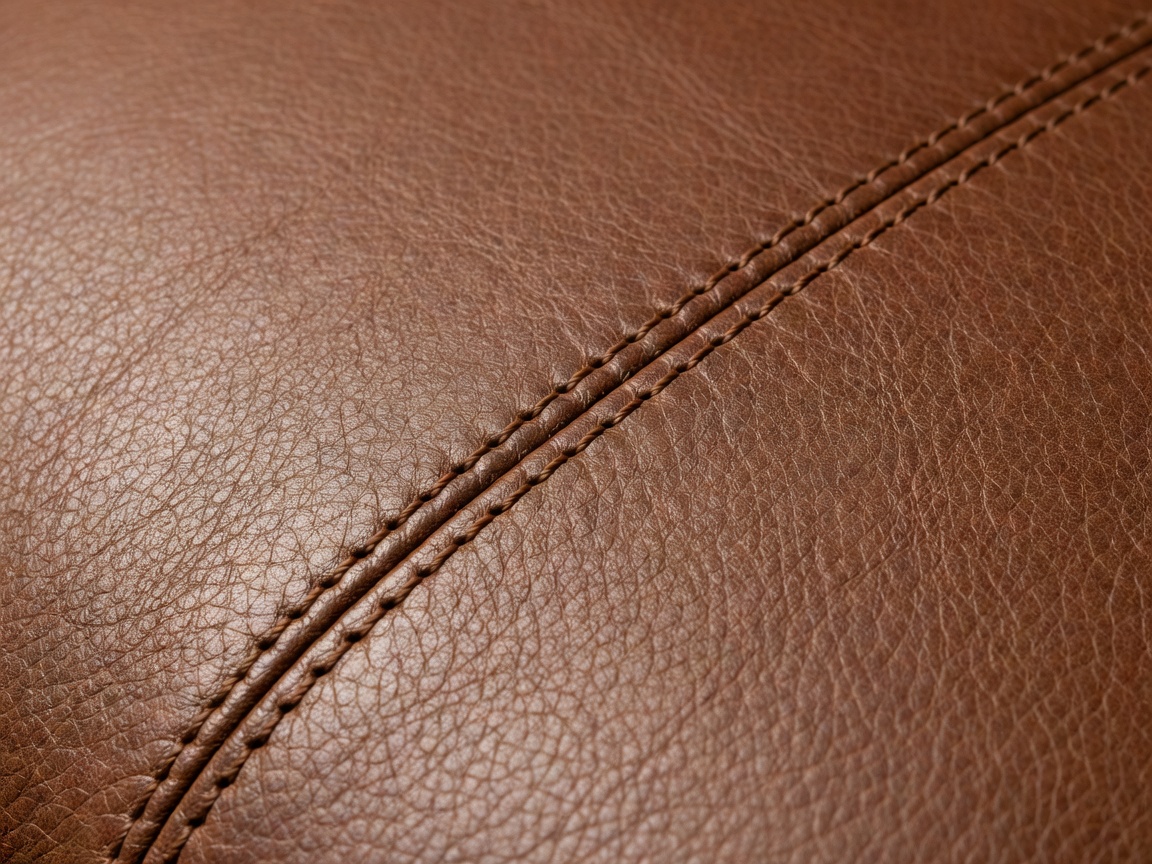
Remove loose dust gently with a clean, soft cloth. Where the maker allows vacuuming, use a suitable soft attachment and low suction around seams, avoiding dragging hard edges across the surface. Do not pull at loose threads or force grit deeper into piping. Lift cushions only as the furniture design permits, and support them rather than using their seams as handles.
For protected leather, the supplier may permit a lightly dampened cloth or a named cleaner. Follow those instructions exactly and avoid soaking seams or leaving liquid on the surface. Test any permitted product in a discreet area and allow it to dry fully before judging the result. A test reduces risk; it does not guarantee that a badly degraded finish will tolerate treatment elsewhere.
Avoid household degreasers, alcohol wipes, abrasive pads and improvised mixtures. Saddle soap and shoe polish are designed for other tasks and can alter furniture finishes. Oils may darken leather or migrate into adjacent materials. “Natural” and “pH-balanced” are not sufficient evidence that a product suits your particular upholstery.
Respond to spills without escalating them
Blot a fresh spill gently with a clean, absorbent cloth; do not scrub it across a larger area. For further cleaning, follow the finish-specific instructions rather than reaching for more liquid. Do not use a hairdryer or place the cushion beside a heater to accelerate drying. Rapid, localised heat can create additional problems while leaving the original stain unresolved.
Ink, dye transfer, grease and unknown stains are sensible reasons to stop and ask a specialist. Repeated attempts with stronger chemicals can remove colour or coating, making a repair more complex. Photograph the mark, note what spilled and list anything already applied. If mould is suspected, reduce unnecessary handling and obtain appropriate advice rather than dry-brushing it around an occupied room.
Maintain the seat, not just the covering
Rotate and dress loose cushions only where the maker recommends it. Some cushions are shaped or covered on one side and are not intended to be flipped. Feather or fibre fillings may need redistribution; foam cores should not be beaten as though every filling responds the same way. An uneven seat can reflect filling movement, failed suspension or frame trouble, so investigate before blaming stretched leather.
Check legs and accessible fittings periodically using the manufacturer’s instructions. Do not keep tightening an unknown fixing if the joint remains loose. New creaks, opening joints, sagging or a tearing seam justify an assessment. Avoid using an unstable chair until it has been checked. Care is partly about preserving appearance, but the supporting structure deserves equal attention.
Choose repair with the future in mind
Patina is a useful description of accumulated change, not an excuse for every defect. A softening sheen or tonal variation differs from flaking coating, active cracking or structural damage. Ask a repairer to identify the likely cause, explain the proposed treatment and state what visual match can realistically be achieved. Recolouring, local filling and panel replacement involve different compromises.
For important historic pieces, the Institute of Conservation offers routes to finding accredited conservation professionals. For everyday furniture, seek demonstrable experience with the same leather type and request a written scope. Keep records of products used and repairs made. The next person working on the chair will make better decisions if they can read its maintenance history instead of guessing what is under the latest layer.
Ask an editorial question about this guide →