Begin with the load path
When someone sits down, the load passes through the cushion and suspension into rails, joints and legs. A well-designed chair manages that load repeatedly without troublesome movement. Ask what the frame is made from, how its members join and how the suspension is attached. “Solid wood” alone does not answer any of those questions.
Sound hardwood construction can be excellent, but timber species, grain direction, moisture condition and joint geometry all matter. Engineered timber can also be useful where its properties suit the design. A mortise-and-tenon joint is not automatically successful because it has a traditional name; it must fit and be appropriately proportioned. Corner blocks, screws and adhesives should support a coherent structure rather than disguise a loose one.
Identify what carries the seat
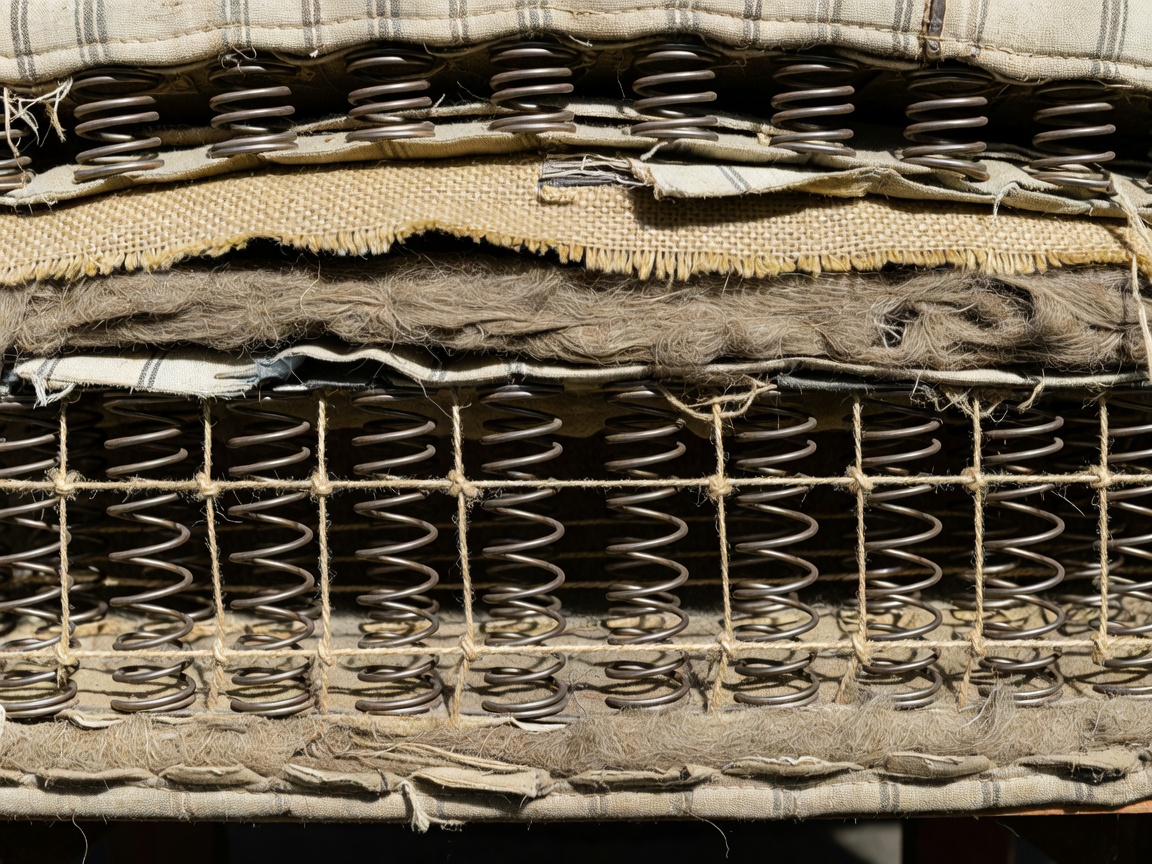
Traditional upholstery often begins with webbing supporting coil springs, followed by tying, covering and shaped stuffing layers. The arrangement gives the upholsterer considerable control over contour and resilience. It also involves skilled labour. Ask to see work in progress: tidy spring placement and attachment tell a more useful story than a photograph of the finished piping.
Serpentine springs and elastic webbing are not automatically inferior alternatives. They can suit particular seat depths, profiles and production methods. What matters is their specification, spacing, fixing and compatibility with the rest of the seat. A suspension system is only as dependable as its anchorage. Ask whether it can be reached and renewed without destroying decorative elements or replacing the whole piece.
Distinguish shape from softness
Traditional stuffing may use materials such as hair and coir, with stitched edges controlling shape. These techniques can create a defined profile and provide opportunities for later rebuilding. They do not guarantee a soft seat, and “natural” does not by itself establish suitability, hygiene or compliance. Ask exactly which materials are proposed and why the maker chose them.
Foam offers repeatable shaping and a wide range of feels. Density describes mass per volume; it is not the same thing as hardness. Fibre and feather wraps change the initial feel and appearance but may require regular dressing. A feather-rich cushion can develop a relaxed outline that one household enjoys and another considers untidy. Try a representative cushion long enough to notice support, not merely the first impression.
| Component | Potential benefit | Question to ask |
|---|---|---|
| Tied coil springs | Controllable shape and resilience | How are springs supported, tied and serviced? |
| Serpentine springs | Efficient support in a compact profile | What are the spacing and fixing details? |
| Foam core | Consistent form and selectable feel | What are the grade, density and replacement options? |
| Feather or fibre wrap | Softer surface character | How much dressing will it need? |
Watch the covering work
Leather stretches differently across a hide. Panel layout, seam position and tension should account for that movement rather than fight it. Look for a balanced appearance around curves and a seam allowance suited to the material. Tiny, closely spaced stitches are not automatically better: excessive perforation can weaken some leather constructions. Ask the workshop to explain its seam choice for the proposed hide.
Piping, buttons and decorative nails affect repair access as well as appearance. A removable cushion cover may simplify replacement, but a zip does not make leather suitable for washing. On fixed upholstery, future work may require careful removal of tacks, staples or trim. Ask which components are intended to be serviceable and whether the workshop retains material references for later repairs.
Put testing beside craftsmanship
BS EN 12520 addresses safety, strength and durability requirements for domestic seating; BS EN 1728 sets out seating strength and durability test methods. They are useful reference points when discussing evidence, but a generic statement that a workshop “uses standards” does not demonstrate that your design has been tested. Request the applicable report, product scope and any limitations.
In the United Kingdom, the Furniture and Furnishings (Fire) (Safety) Regulations 1988, as amended, can impose requirements on domestic upholstered products. Applicability and obligations depend on the product and supply circumstances. Ask the supplier to explain the current requirements for the complete assembly, not merely a single fabric or foam. FIRA International and SATRA provide testing information; neither organisation’s name should be treated as an endorsement without supporting documentation.
Make inspection part of the order
For a substantial commission, request photographs at agreed stages: bare frame, fitted suspension and upholstery before final closure. Photographs cannot establish every hidden detail, but they create a record and make the maker’s explanations concrete. The Victoria and Albert Museum’s furniture collections offer useful historical context for changing forms and techniques; historical precedent, however, is not a substitute for a safe modern specification.
Finish by recording seat height, usable depth, cushion construction and the expected maintenance routine. Those details connect workshop choices to daily use. A well-made chair should not need a mysterious story to explain itself: its maker should be able to describe what supports you and how that support can be maintained.
Next entry: Ordering Bespoke Work →